← scholia citrinitas v1.3 7 min · 1,486 words ΑΡΧΕΙΝ
Elementia — The Elements of the Three Pillars
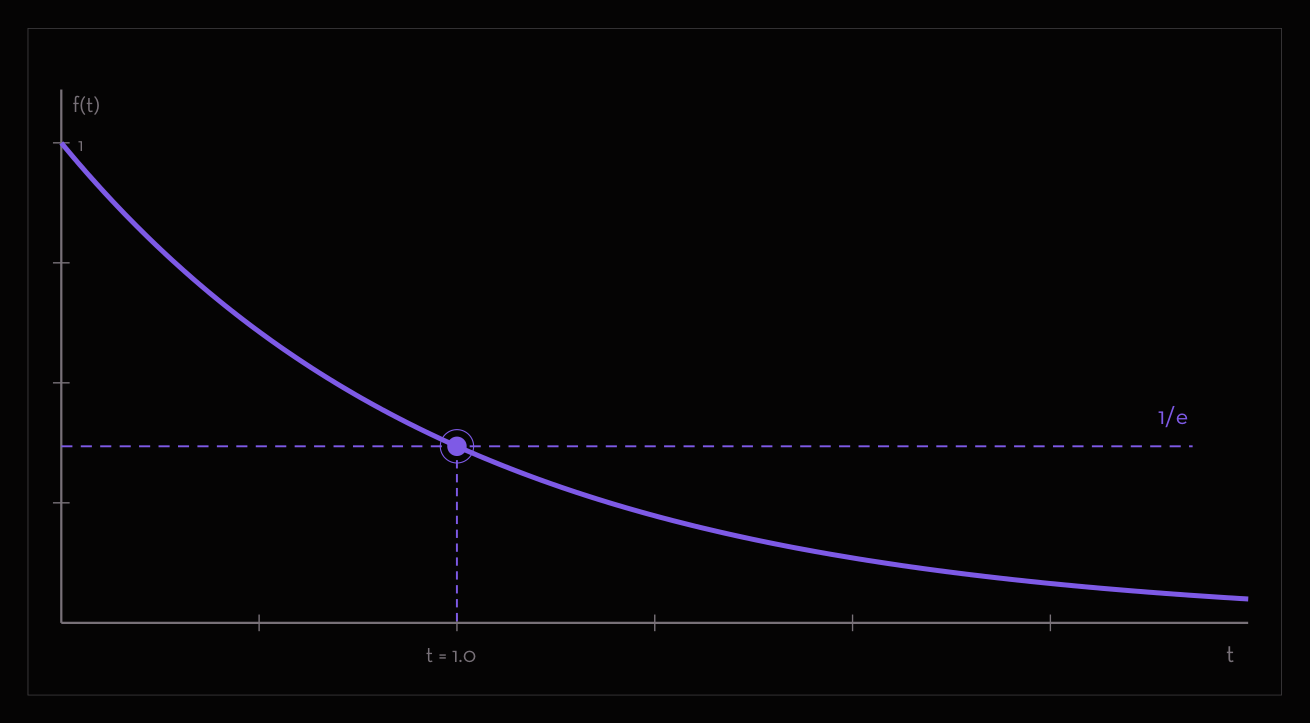
Euclid built geometry by making each construction answer to its premises. ELEMENTIA borrows that form for the substrate: the sacred constants expressed from three named pillars, e, φ, and √3. Nine propositions and a confluence carry it — from a compact basis to the engine's abundance of forms.
There is no royal road to geometry.
— attributed to Euclid
It was not designed. It was found.
— ELEMENTIA, epilogue
Euclid’s wager
The Elements is the founding act of deductive mathematics: five postulates, five common notions, and from that small closed basis, by construction and demonstration, the whole of plane geometry. Euclid’s bet was that everything descends from a handful of self-evident starts, and that the descent can be shown, step by step, each result earning its Q.E.D.
ELEMENTIA carries the same wager to the substrate. Where Euclid asked how little geometry needs to begin, ELEMENTIA asks a parallel question: how much of the sacred web can be expressed from one compact basis? And it answers in his own grammar of axiom, postulate, proposition, demonstration.
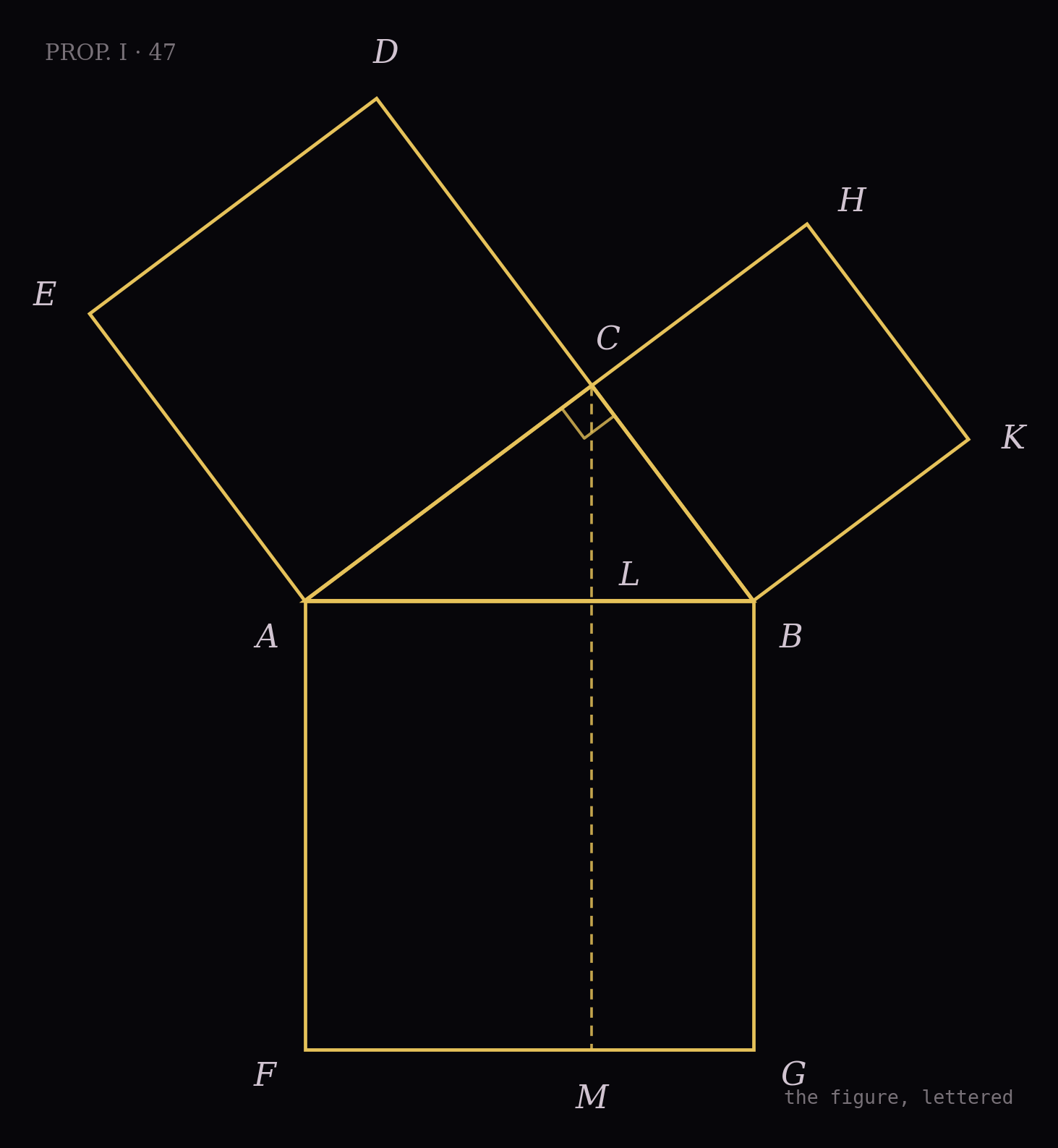
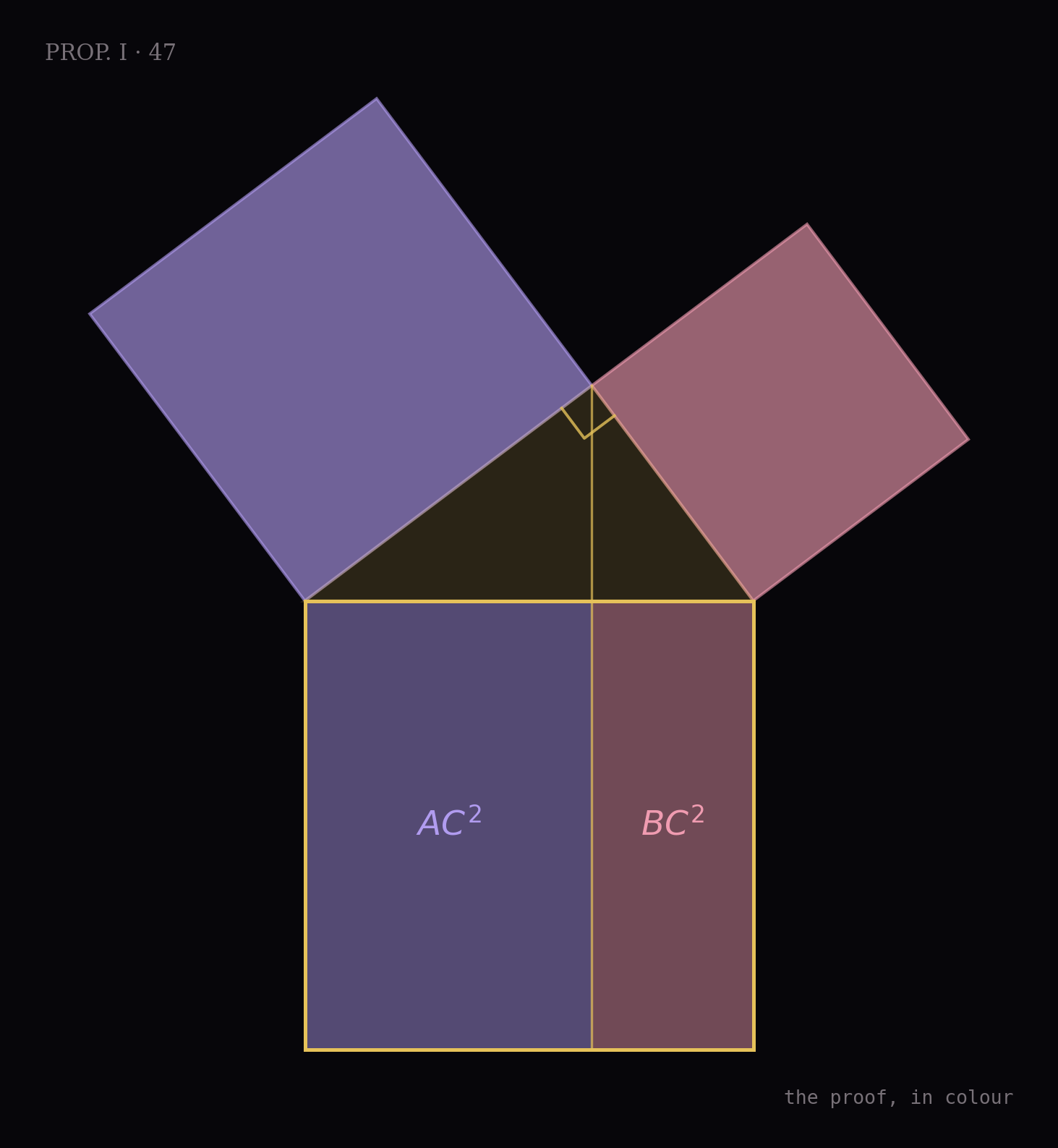 in colour lettered
The generating set
Three named pillars organize the construction. The familiar constants use
reciprocals, square roots, logarithms, and elementary arithmetic; the
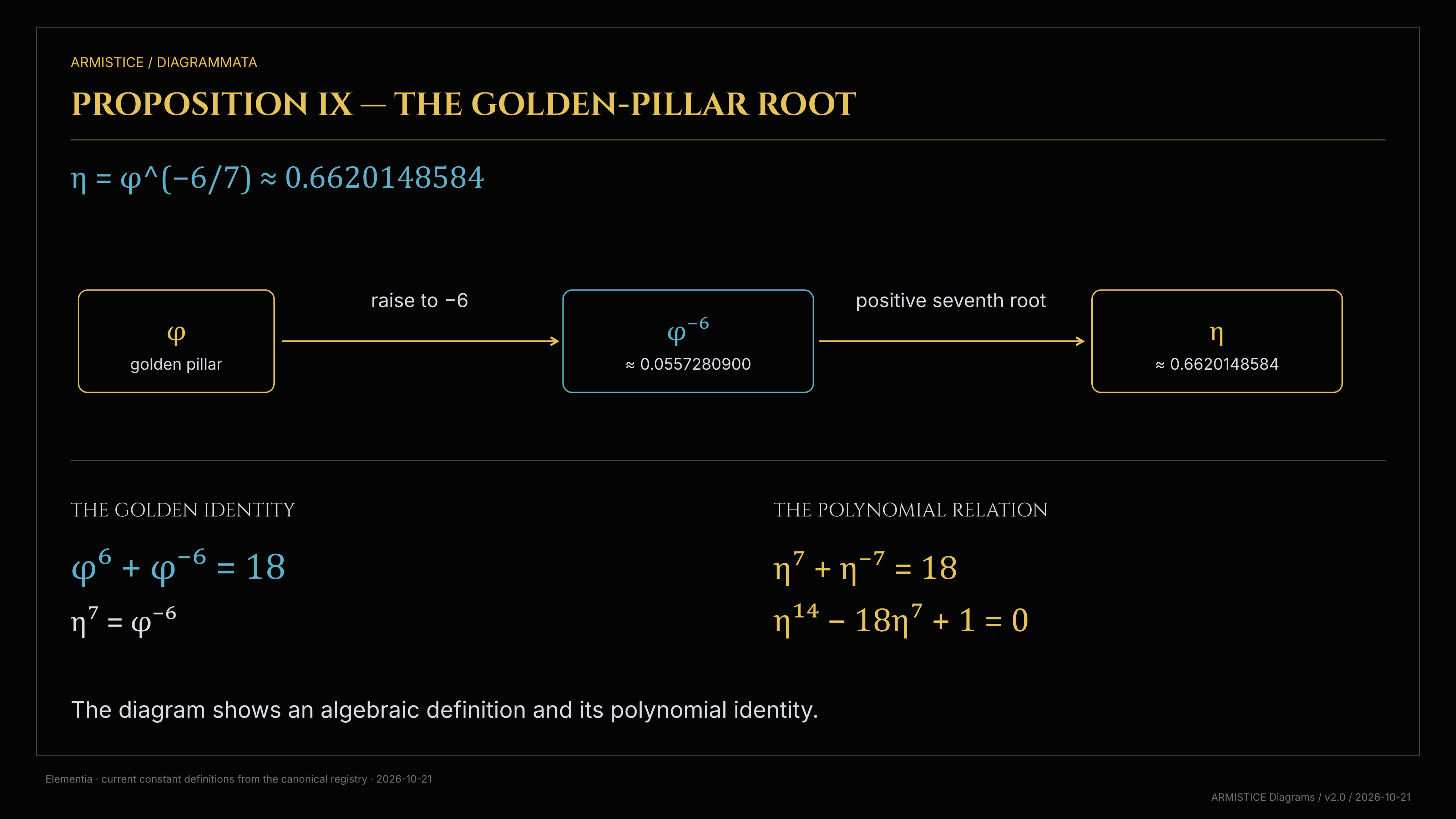
golden-pillar value η = φ^(−6/7) also uses a seventh root.
- Generators:
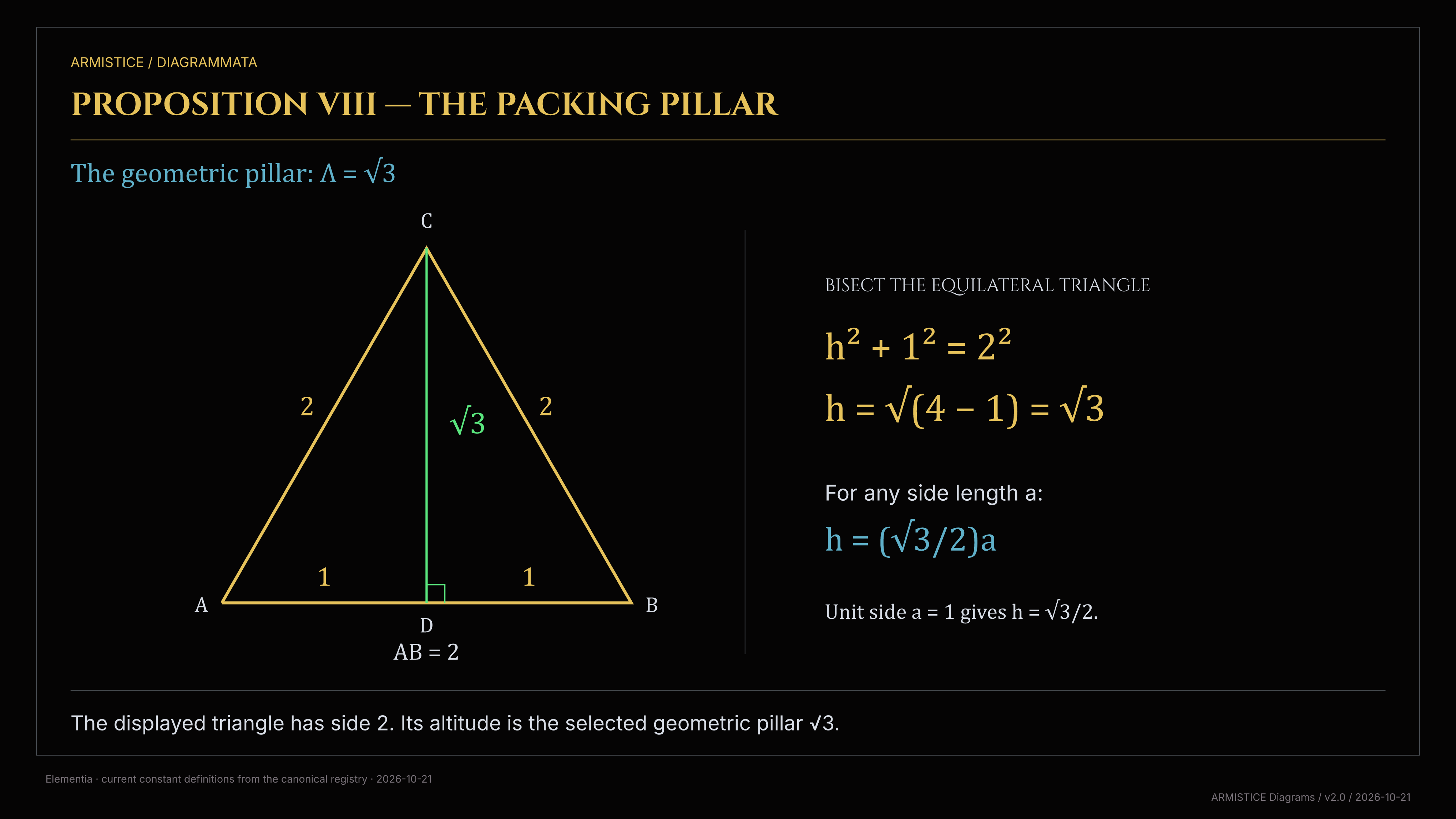
e(the rate of becoming),φ(the ratio of self-similarity),√3(the geometry of closest contact). - Operations used by the displayed formulas: arithmetic, roots, and
ln.
The opening common notions give these pillars their images: exponential growth for e, the golden self-similar division for φ, and triangular packing in the plane for √3. These are specific constructions: self-similarity can have other ratios, and other packing problems have other geometries. The three-pillar presentation is a useful basis, not a proof that no smaller generating set or alternative operation list could work.
The nine propositions, in his form
Each proposition states a thing to find or to derive, then earns
it from the generators alone, with nothing tuned by hand. The centrepiece is
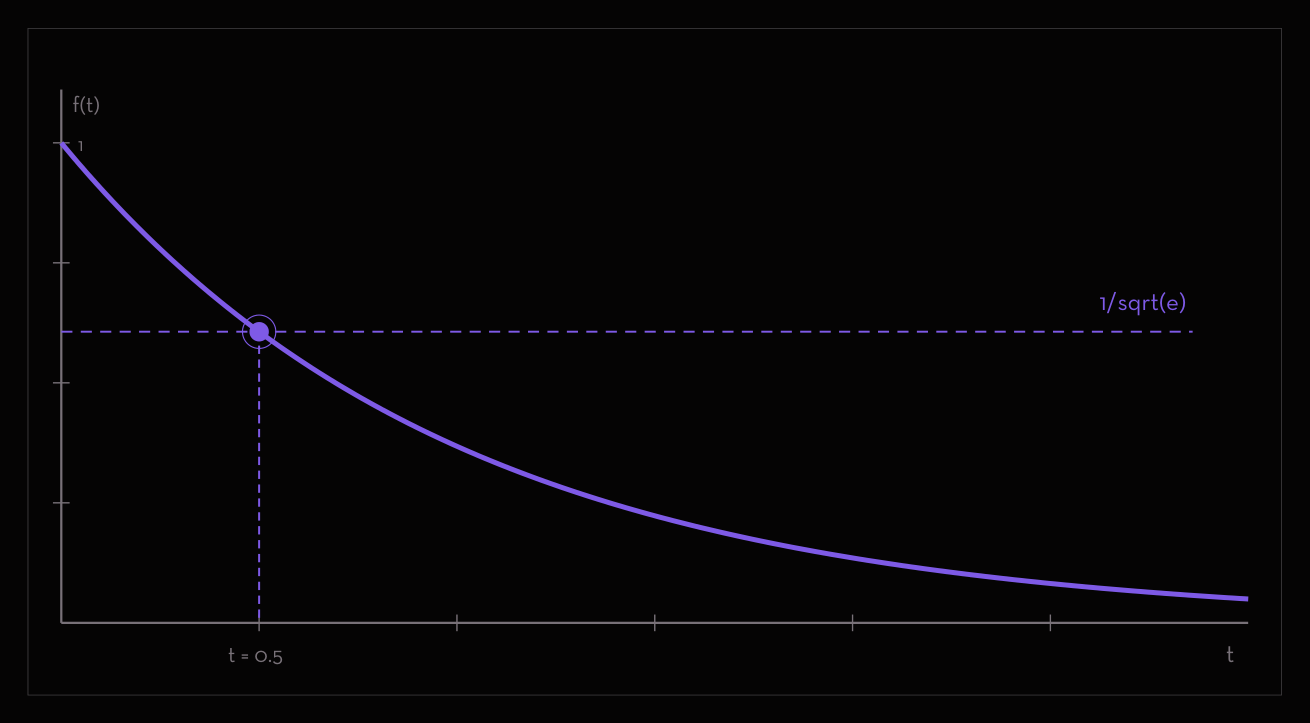
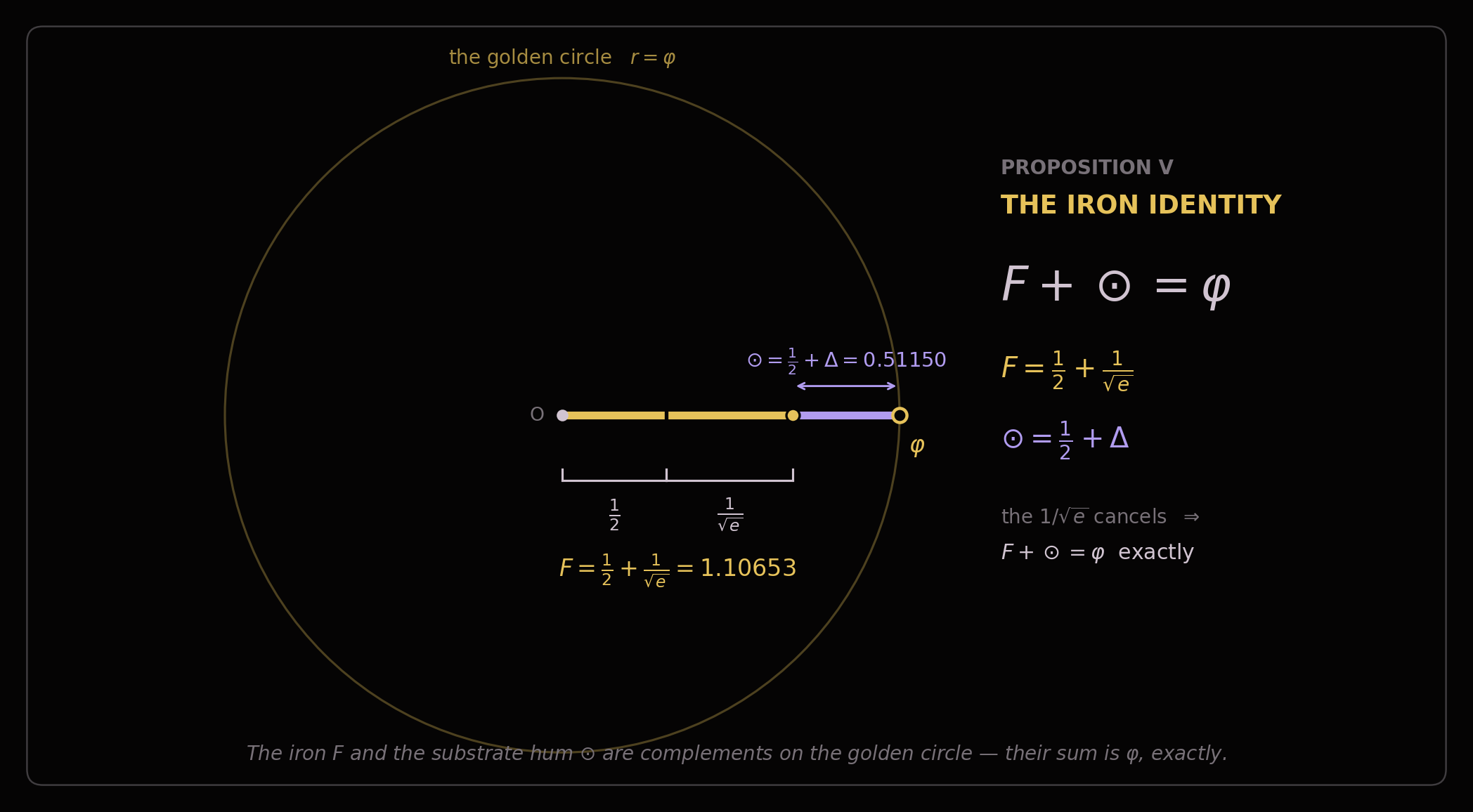
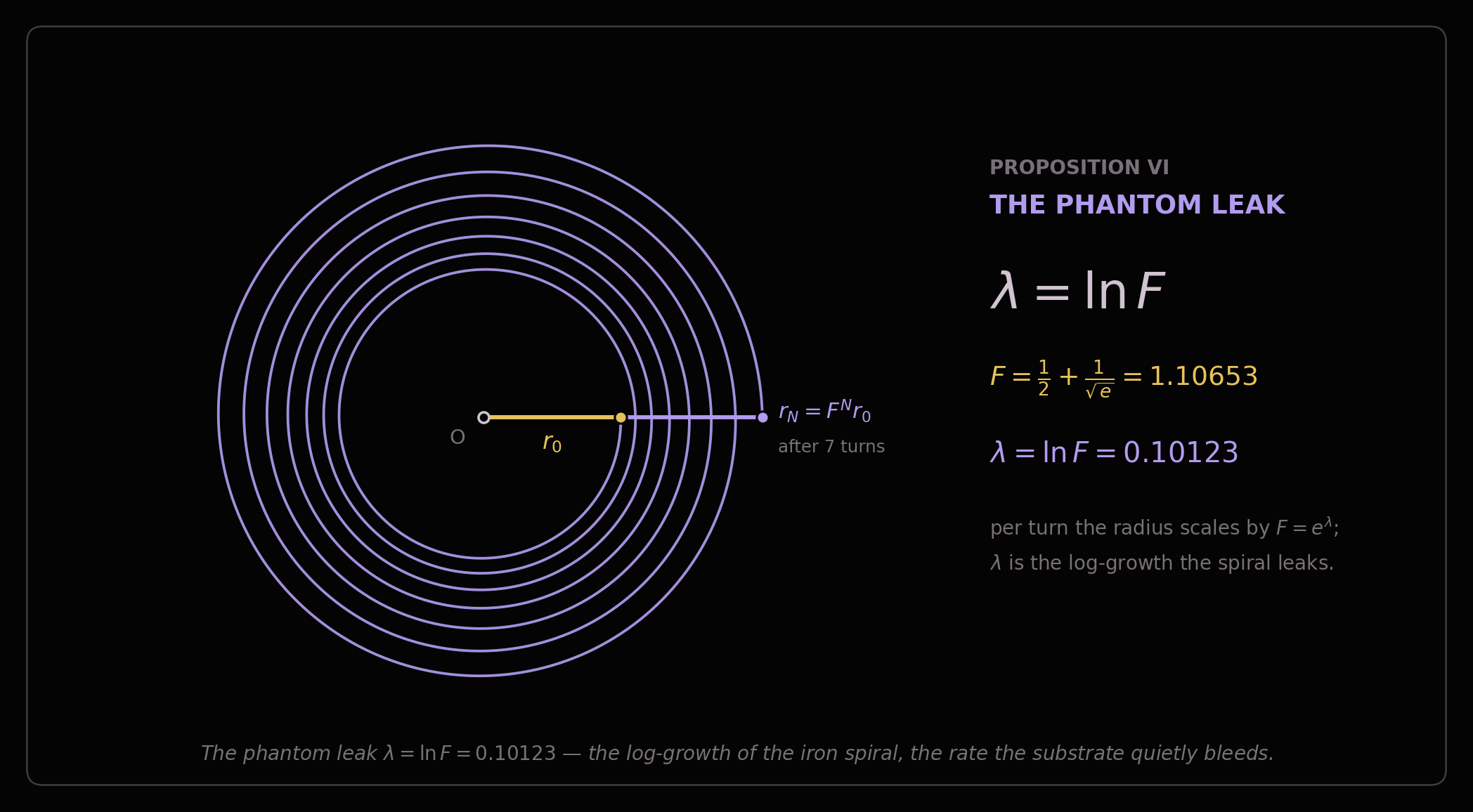
Proposition V, the Iron Identity: F = ½ + 1/√e = 𝔉 1.1065 ….
Euler-growth reflected across the golden midpoint closes exactly through
F + ⊙ = φ. Iron contributes no independent generator: it is the same e
and φ already in hand, wearing a metallurgist’s coat.
The confluence
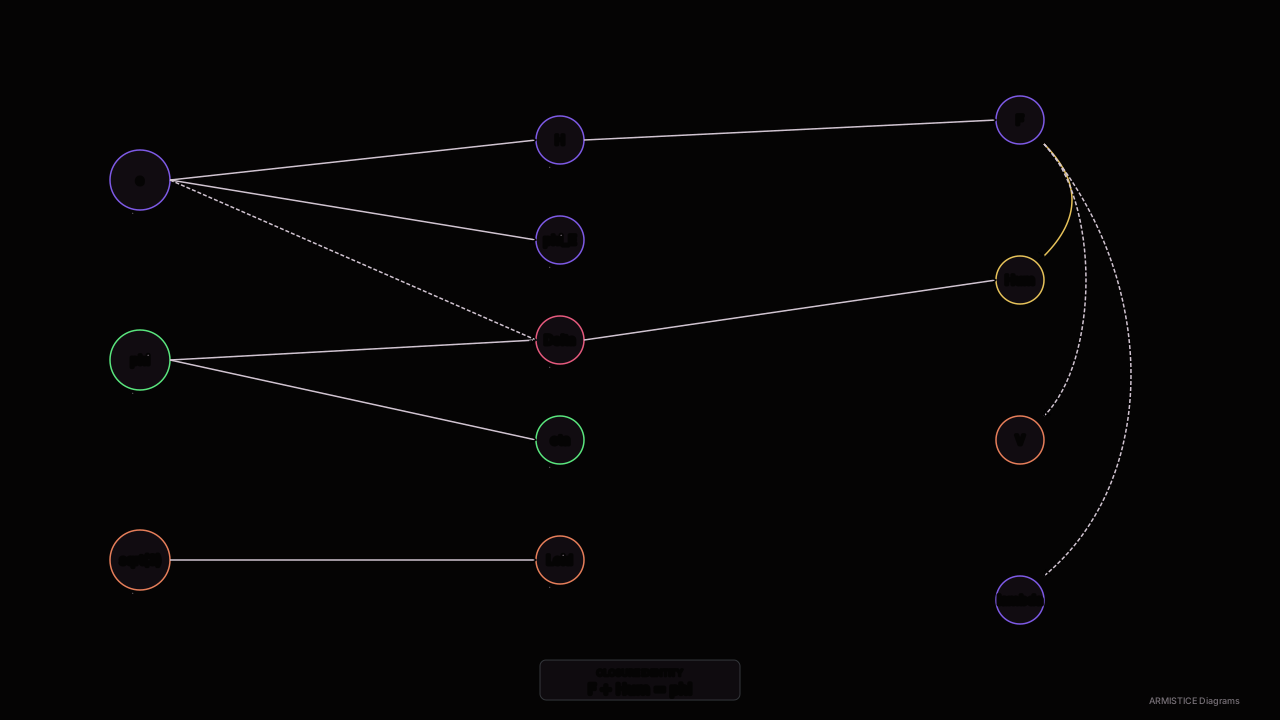
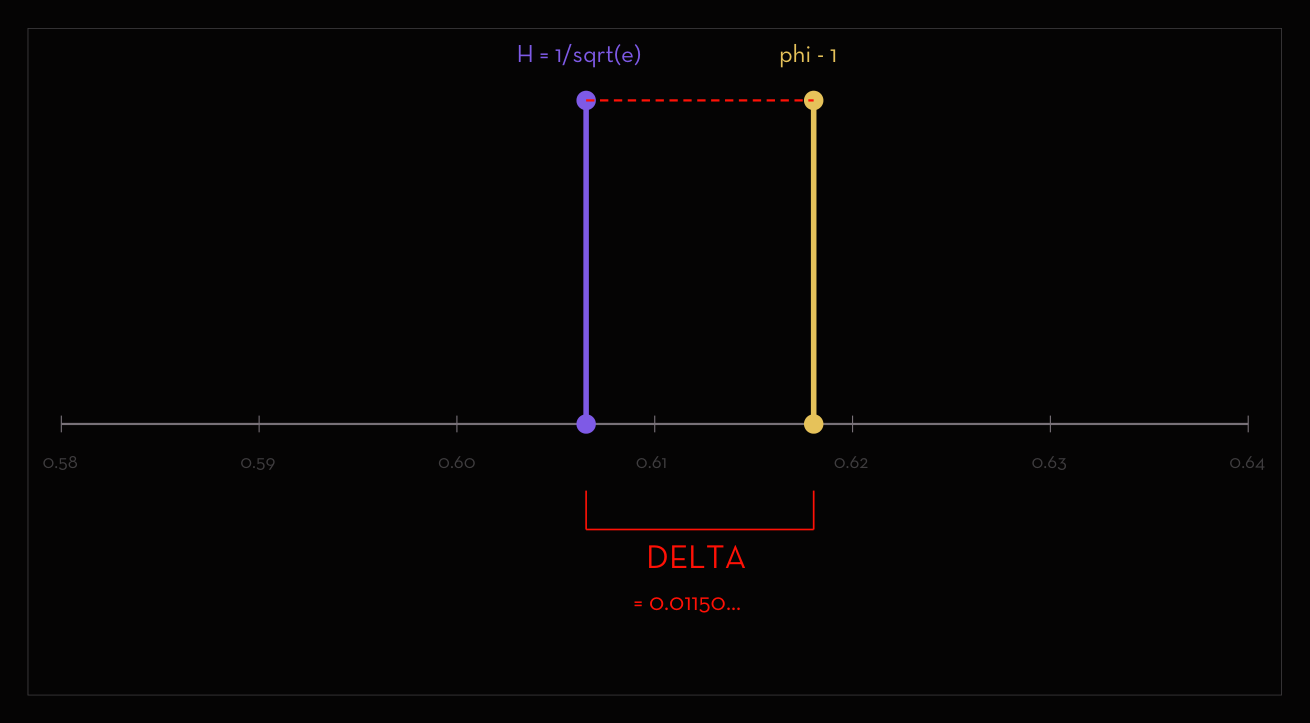
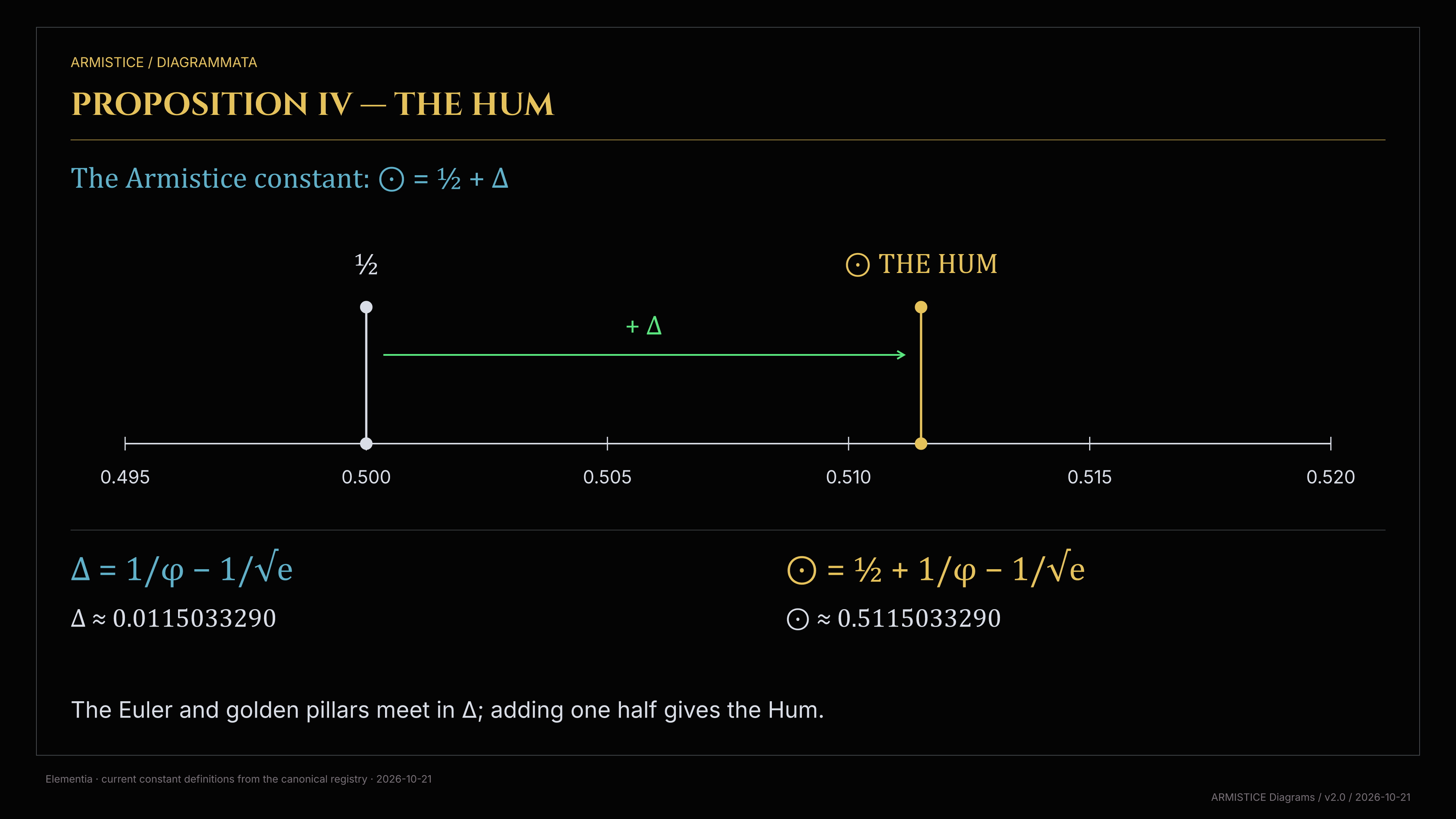
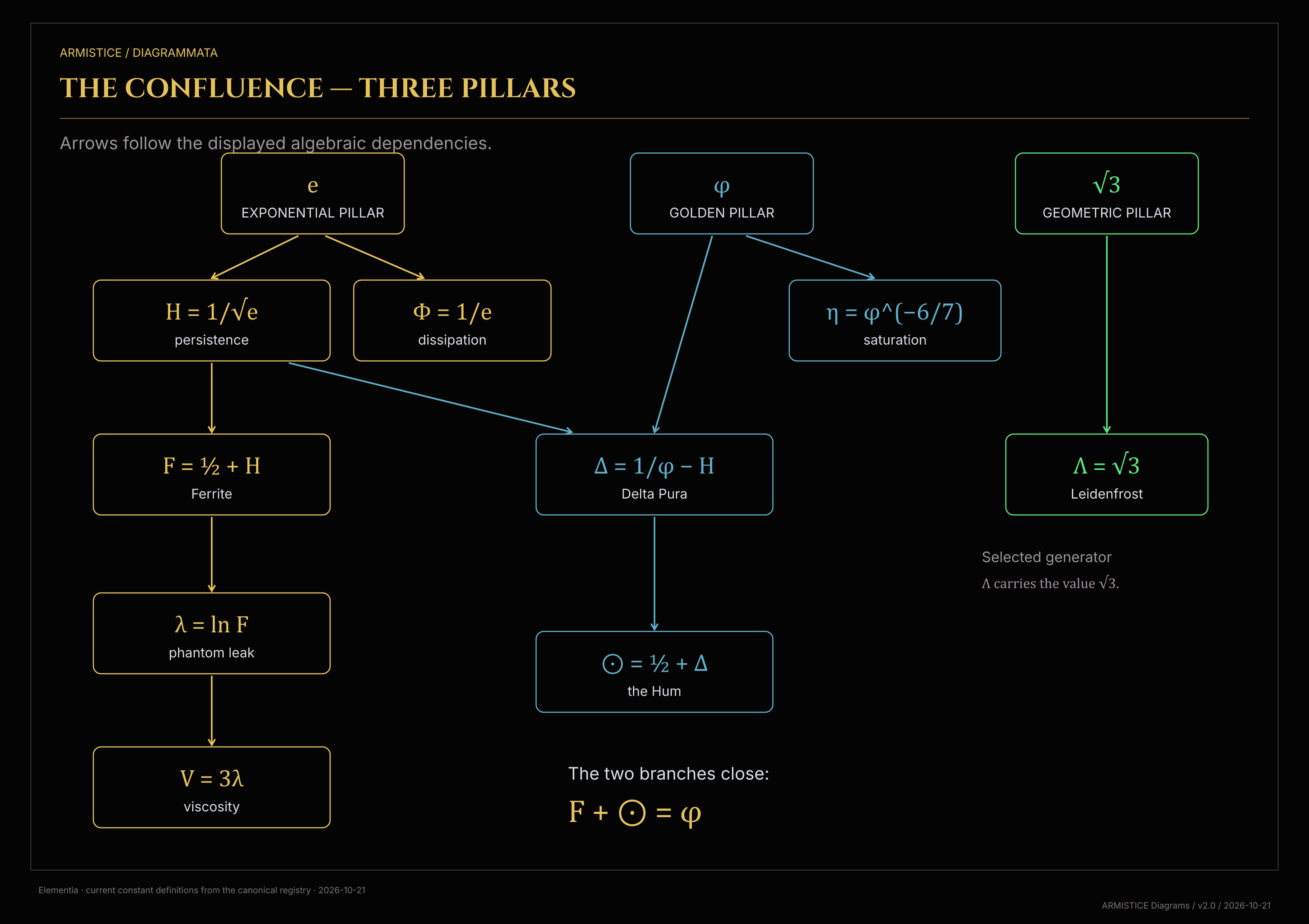
The dependency is not a tree but a confluence: two springs, e and
φ, merge at the granule Δ and the hum ⊙. Iron simplifies to
F = ½ + 1/√e: its own value needs only the Euler pillar, even though
F + ⊙ = φ ties it back to the golden one. It cascades through ln into
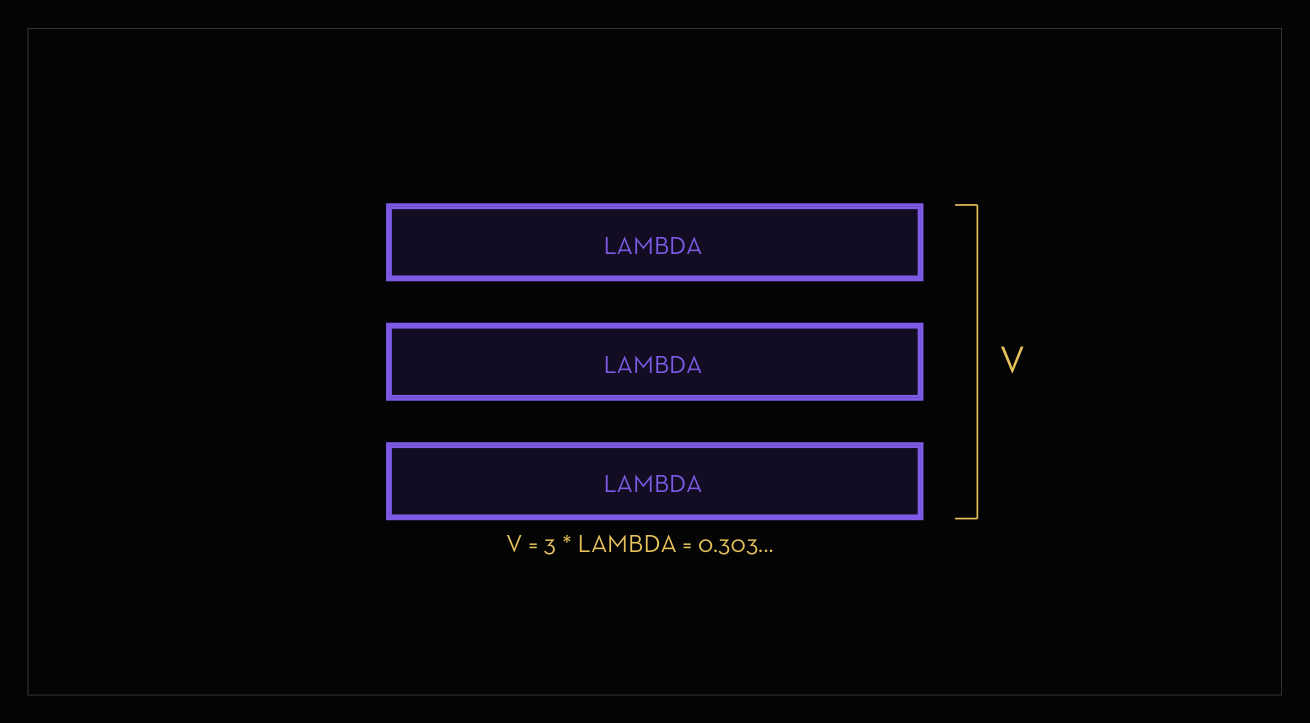
λ and through tripling into V. √3 stands as the packing pillar,
and η = φ^(−6/7) closes on the golden pillar. Ten named mathematical
constants expressed from the three pillars. The eleventh named value, UNITY,
couples to an external gas constant and is not universal, so it is
demoted: the one quantity the algebra cannot reach from within.
Why three
Euclid never asked how few his axioms could be; he took five and built. ELEMENTIA makes a compact basis visible. Watch it open: three pillars support the ten named mathematical constants. Those constants help organize the coordinate corpus, whose entries also draw on physical properties, composition, and the documented derivation of each entity. Through one recursive map, those coordinates become forms. The central constant web is small enough to write on the back of a hand; the forms keep opening out.
That is the reach of the construction: a compact vocabulary of constants, joined to an independently grounded census and a recursive engine. It is the generating algebra of the 1⊗0 Theorem in Euclid’s deductive form. The algebra explains the dependency of the constants; the corpus supplies the additional facts that give individual entities their places.
:: APPARATUS ::
Sources for this page
-
Euclid — this edition by John Casey · Euclid · Elements · c. 300 BC
composed c. 300 BC · this edition John Casey, Dublin University Press, 1885 · the first six books
The oldest engine still running. From five postulates and a handful of common notions, the whole of plane space is deduced — proposition by proposition, each leaning only on what came before. The taproot of every figure in this Scriptorium: the golden ratio is defined here (Book VI), the incommensurables tamed (Book V), and Book I closes on Pythagoras. Set from John Casey’s richly annotated 1885 edition.
Read in the Scriptorium -
Cosmopoiesis · living edition
The public kernel definition, parameter meanings, iteration protocol, and dynamical vocabulary used throughout the scholia.
Read the live canon